Skin
Do silk pillowcases help acne? What the only trial found
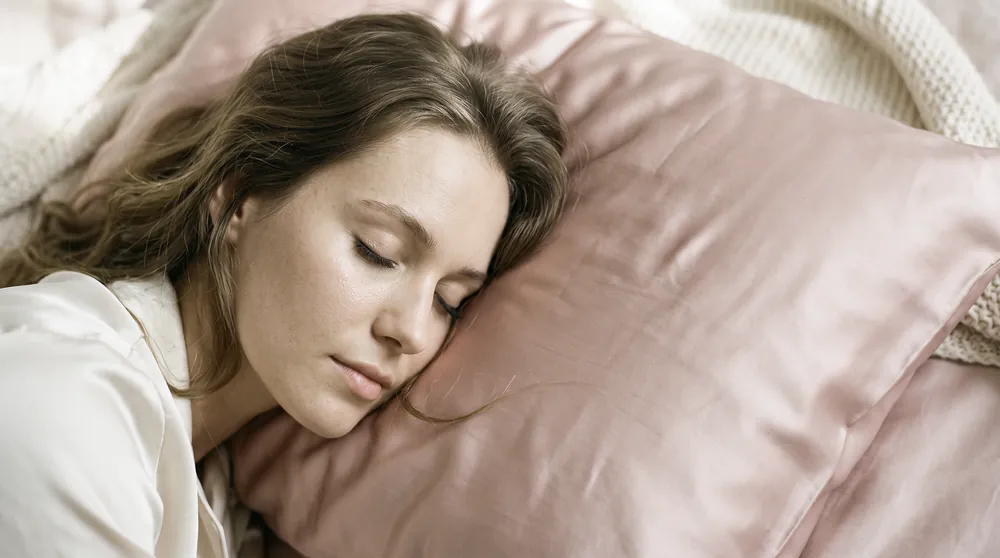
Search for silk pillowcases and acne and you will find plenty of confident promises. The evidence is much thinner. Only one pillowcase trial for acne has finished. It did not use silk, and it found no benefit. Here is what it tested, what is still waiting to report, and the one thing about your pillowcase that is worth doing.
What did the pillowcase acne trial test?
The trial ran at Wake Forest University in the United States, from 2008 to 2009. It took 40 adults with mild to severe acne on the face. Each person was given either a "silk-like" pillowcase or a 100% cotton one, at random, and slept on it for 12 weeks. The investigators counting the spots did not know which pillowcase each person had.
The results were posted on the ClinicalTrials.gov registry in 2017. The silk-like pillowcase did no better than cotton. If anything, the cotton group did a little better on the raw numbers, but with 40 people the trial was too small to show a real difference either way. It was never published in a journal.
Was the trial pillowcase actually silk?
No, and this is the part most summaries leave out. The silk-like fabric was 50% polyester and 50% nylon, a continuous-filament synthetic with an antimicrobial finish added to it. It was sold as DermaTherapy, and Precision Fabrics Group co-sponsored the trial.
So the one finished trial tells us nothing direct about mulberry silk. It tested a synthetic with an added finish, and even that showed no benefit over plain cotton.
You may have read online that a recent trial linked silk-like pillowcases to fewer spots. The posted results do not show that, so treat those summaries with care. When a claim about silk and skin sounds certain, it is worth asking which study it comes from and what fabric that study used.
Has anyone tested real mulberry silk on acne?
A trial was registered in November 2023 to compare a mulberry silk pillowcase with cotton. It planned to follow 48 people for 8 weeks and to measure spot counts, redness, water loss from the skin, skin oil and C. acnes bacteria. It was registered by an industry sponsor, Integrative Skin Science and Research.
Its record was last updated in November 2023. It is listed as not yet recruiting, its status is unknown, and it has no results.
That leaves a plain answer. There is no peer-reviewed study of a mulberry silk pillowcase and acne. Until that trial reports, or another one does, nobody can tell you that silk helps your skin clear up.
What about silk T-shirts for back acne?
One small study is often quoted. A 2017 study gave 14 patients with acne on the back T-shirts made from DermaSilk to wear for 6 weeks. DermaSilk is a specialist sericin-free silk with an antimicrobial finish added to it.
There was no control group, so there was nothing to compare the shirts against. The fabric was a treated specialist silk, worn on the back, rather than a woven mulberry pillowcase under your face.
The finish matters here too. In a separate study on eczema, the same kind of silk was tested with and without its antimicrobial finish, and the finish mattered. So a result from treated silk cannot be borrowed for plain silk.
Can your pillowcase make acne worse?
Pressure, friction, rubbing and covering the skin can flare acne. A 1975 paper by Mills and Kligman described this as acne mechanica. Their examples were straps, sports pads and tape on the skin, not bedding.
It is easy to see why people link that to pillowcases. But no study has tested whether a pillowcase fabric makes a difference. On friction against skin, the one independent study that put silk and cotton side by side, with 19 volunteers, found no clear difference, and silk read slightly higher in most of the tests. So we cannot tell you silk means less friction on your skin. Our science page has the detail under skin and sleep lines.
You may also read that silk is naturally antibacterial, so it stays cleaner. No test of plain, untreated woven silk shows that. Where silk fabrics reduced bacteria in studies, an antimicrobial finish had been added.
What should you do with your pillowcase if you have acne?
Wash it every week, whatever it is made of. It is simple, it costs nothing, and it is the honest advice.
If you sleep on silk, the usual care applies: cool water, a pH-neutral detergent with no enzymes or bleach, and no tumble dryer. Our guide on how to wash a silk pillowcase goes through it, and our care answers keep it short. A second pillowcase makes the weekly wash easier, because one can dry while you sleep on the other.
For the acne itself, a pharmacist, your GP or a dermatologist is the right person to ask. A pillowcase is not a treatment, and we will not sell ours as one.
That is why you will not see SOIEA call its pillowcase good for acne-prone skin, or promise fewer breakouts. Those are on our list of claims we don't make, and the acne section of our science page sets out the evidence with its sources.
SOIEA is 100% mulberry silk at 22 momme, in champagne and blush, launching in December 2026 for the UK and Ireland. Choose silk because you love how it feels. That is reason enough. See the pillowcase.
Questions people ask
No study shows that. The only completed pillowcase trial compared a polyester and nylon silk-like fabric with cotton, and the silk-like fabric did no better. No trial of real mulberry silk against cotton has reported yet.
Every week, whatever it is made of. It is simple and it costs nothing. For the acne itself, a pharmacist, your GP or a dermatologist is the right person to ask.
No test of plain, untreated woven silk shows that. Where silk fabrics reduced bacteria in studies, an antimicrobial finish had been added, as it was on the silk-like fabric in the acne trial.
One was registered in November 2023, planning to compare mulberry silk with cotton in 48 people over 8 weeks. It is listed as not yet recruiting and has no results.
The evidence does not show that. The one independent study that tested silk and cotton against skin, with 19 volunteers, found no clear difference, and silk read slightly higher in most conditions.
Sources
- Wake Forest University. Efficacy of silk-like bedding fabric pillow case in the treatment of acne vulgaris. ClinicalTrials.gov NCT00767104, results posted 2017
- Integrative Skin Science and Research. Assessment of the effects of silk pillowcases on acne prone skin. ClinicalTrials.gov NCT06142487
- Schaunig C, Kopera D. Silk textile with antimicrobial AEM5772/5 (Dermasilk): a pilot study on acne vulgaris on the back. Int J Dermatol, 2017
- Stinco G, Piccirillo F, Valent F. A randomized double-blind study to investigate the clinical efficacy of adding a non-migrating antimicrobial to a special silk fabric. Dermatology, 2008
- Ramalho A, Szekeres P, Fernandes E. Friction and tactile perception of textile fabrics. Tribology International, 2013
- Ohio State University extension, Silk fabric care fact sheet
Every claim here is checked against the published sources above and our graded evidence page. We don't make claims the evidence doesn't support.
Keep reading
Skin
Do silk pillowcases stop wrinkles? An honest look at sleep lines
No study shows that a silk pillowcase prevents or reduces wrinkles. Sleep lines come from your face pressing into the pillow when you sleep on your side or front, and a pillowcase does not change that pressure. Sleeping on your back helps most. Silk gives your face a smooth, soft surface to rest on.
· 4 min read
The fibre
What is mulberry silk, and why is it reeled not spun?
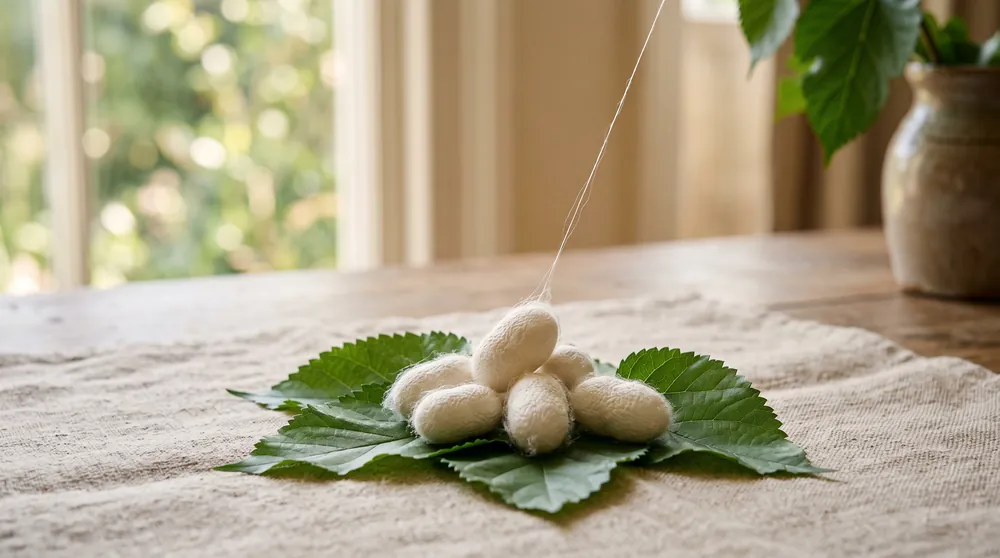
Mulberry silk comes from silkworms fed on mulberry leaves. Each cocoon is unwound, or reeled, as one long continuous filament, so the yarn has no short fibre ends on its surface. Spun silk is made from short fibres, more like cotton yarn. Silk itself is a natural protein fibre, made mostly of fibroin.
· 4 min read
Care
How to wash a silk pillowcase without ruining it
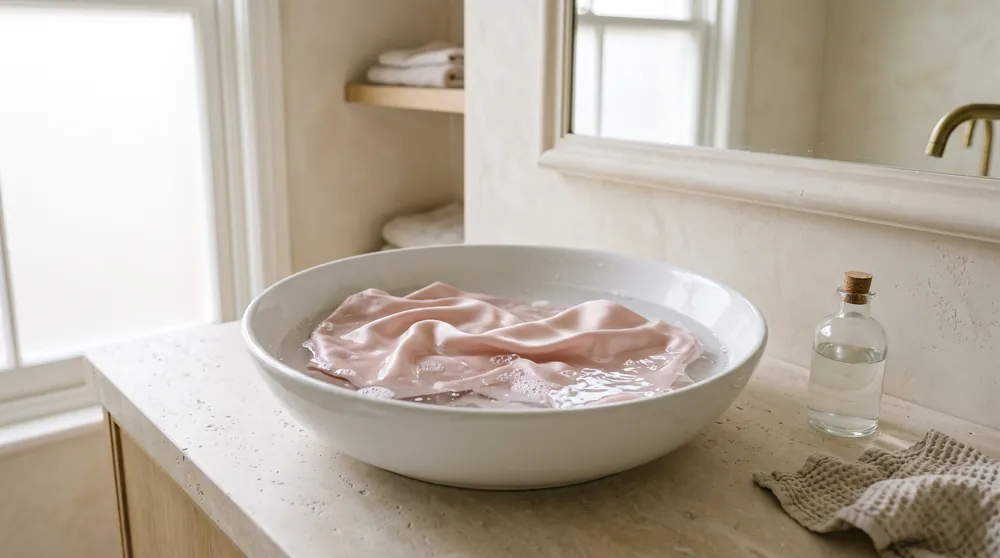
Wash it every week in cool water, by hand or on a delicate cycle inside a mesh bag, with a pH-neutral detergent that has no enzymes or bleach. Skip the tumble dryer. Lay it flat or hang it to dry out of direct sun, which fades silk. Check your care label first.
· 4 min read
Be first to sleep on it.
22 momme mulberry silk, launching December 2026. Shipping to the UK and Ireland.
Join the pre-order list